Supreme Court Shuts Bofors Appeal, Politics Turns To Memory
Supreme Court Shuts Bofors Appeal, Politics Turns To Memory
By dismissing a third-party challenge to the 2005 Delhi High Court quashing of charges, the Supreme Court has closed the Bofors file in court, shifting the fight to how parties script corruption memory ahead of key state contests.
 Veera NairTET TV Anchor — India Desk
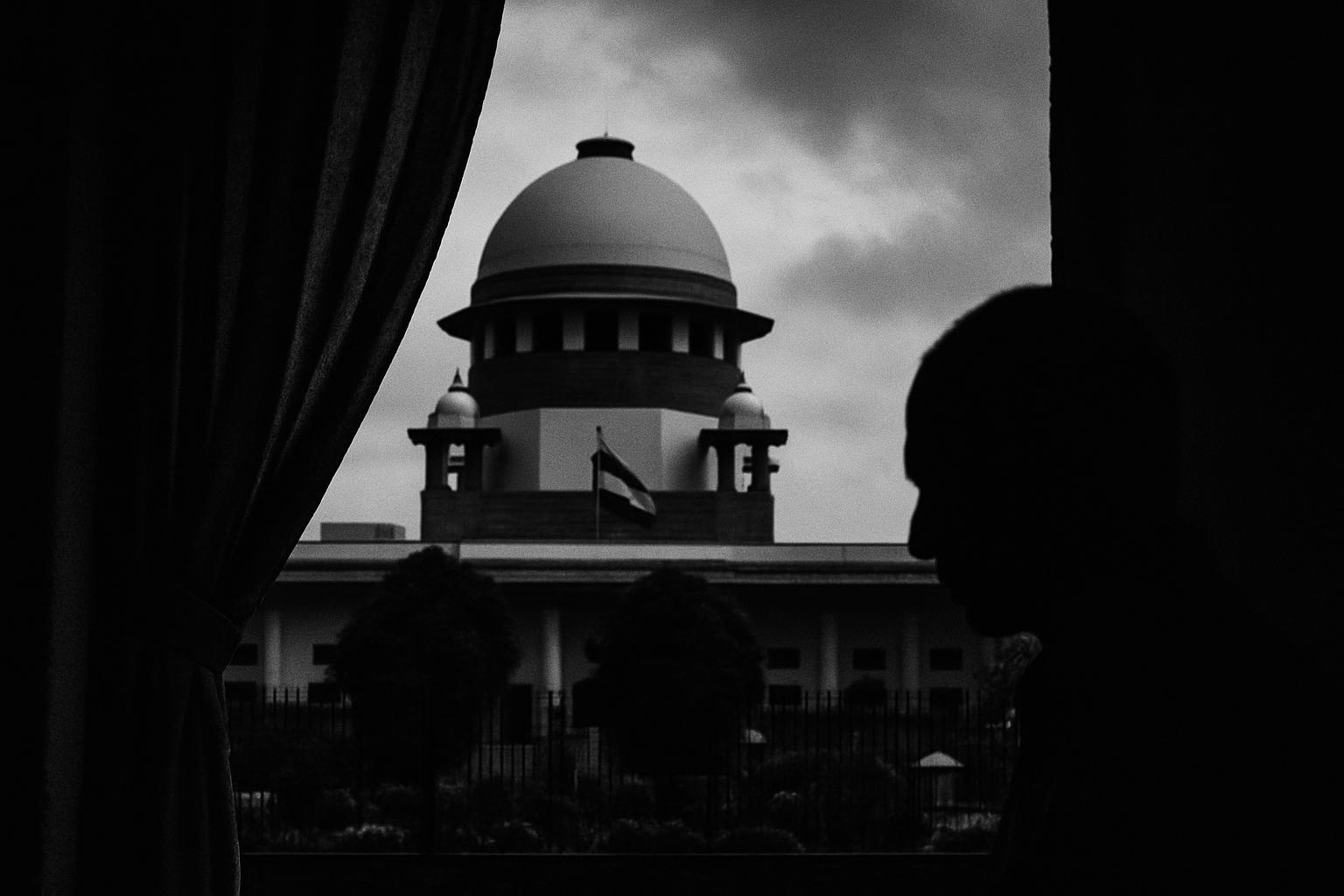
The Bofors case has reached formal closure in the Supreme Court. A bench of Justices JB Pardiwala and K Vinod Chandran has dismissed an appeal against the 2005 Delhi High Court judgment that quashed criminal proceedings. A four decade controversy now exits the courtroom, and enters the arena of political recall.
This was not a retrial or a reopening. It was the end of a long tail. The appeal before the Supreme Court was filed in 2018 by advocate Ajay K Agrawal after the Central Bureau of Investigation chose not to challenge the High Court order. That decision flowed from the then United Progressive Alliance government not granting permission to appeal. On Friday, the bench refused Agrawal’s request for four weeks to delete the names of two respondents who had died during the pendency of the case. The court noted the vintage of the proceeding and dismissed the matter.
No question of adjournment. It is a 2018 matter.
That single line told the story. There was no appetite to let a case, once quashed on evidentiary grounds by the High Court, linger on procedural edits. Justice RS Sodhi of the Delhi High Court had quashed all charges against the Hinduja brothers and AB Bofors, holding that the prosecution failed to place admissible, reliable evidence that linked the accused to alleged kickbacks. Without a timely challenge from the investigating agency, the High Court’s decision became the last reasoned word. The Supreme Court’s dismissal now gives it docket finality.
The mechanics of closure
A few procedural details matter because they explain why the door is shut. The respondent list changed over time. Srichand P Hinduja and Gopichand P Hinduja passed away during the pendency of proceedings, and Prakash P Hinduja remained on record. Agrawal’s request to delete the names of the deceased could not justify delay in a matter filed in 2018. In appellate practice, substitution and deletion are routine housekeeping. They do not create a substantive ground to continue an appeal that already rests on a High Court finding of insufficient admissible evidence.
The Supreme Court did not reassess facts or law beyond the threshold of whether this appeal deserved to proceed. By dismissing it, the court did not overturn the 2005 judgment. It acknowledged that the pathway to contest it had effectively closed. That is the end of the road in court for a case that has lived on more vividly in speeches than in charge sheets.
From affidavits to arguments on stage
What follows will not be about affidavits. It will be about memory. Parties rely on a repertoire of cases that stand in for larger themes. Bofors has been one such emblem, a shorthand in rallies and television debates. With the legal process concluded in this fashion, its role shifts from a live case to a curated episode within longer narratives about intent, probity and accountability.
The text for those narratives is set by procedural history. The High Court quashed the charges for want of admissible, reliable evidence. The investigating agency did not file a timely appeal. A third party appeal filed later has now been dismissed. That chronology is the script, and it is the limit.
For parties in opposition or in government, the incentive is not to litigate facts anew. It is to frame timelines and decisions. One reading stresses that a major controversy ends without a courtroom conviction, which can be presented as institutional exhaustion. Another reading stresses that the system allowed a politically sensitive case to evaporate through procedural attrition, which can be presented as institutional failure. Both readings use the same dates. Neither adds new facts.
This is why the manner of closure matters as much as closure itself. A High Court quashing based on evidentiary insufficiency leaves no space for fresh courtroom theatre unless there is new admissible material. The Supreme Court’s refusal to entertain a third party appeal removes the last appellate peg on which to hang a new argument. The ground now is campaign messaging, where selective emphasis is a powerful tool. Expect references to who filed and who did not. Expect reminders of who asked for time and who refused it. That is how memory politics is made legible to voters.
The tactical uses
The uses are straightforward. An opposition party may cite the longevity of the controversy to question a rival’s ethos. A ruling party may cite finality and argue for moving on to current governance metrics. Regional parties may localise the story, placing it alongside state scandals or clean ups, to argue consistency of character. None of this requires a fresh evidentiary claim. It requires careful stitching of sequence and motive around the same set of court orders.
Two guardrails are worth restating. First, a quashing for want of admissible, reliable evidence is not a certificate of innocence. It is a legal conclusion about the sufficiency of proof at that time under the applicable standards. Second, the dismissal of an appeal, especially a third party appeal filed years later, is not a re litigation of the High Court’s analysis. It is a finality decision on whether the Supreme Court should entertain the challenge. These are dry distinctions. In an election year they set the bounds for rhetoric that stays tethered to the record.
For citizens fatigued by a saga that has outlived generations of leaders, the significance of Friday’s order lies in clarity. There will be no further hearings on this appeal. The case, as a courtroom contest, is closed. What remains is its afterlife in stump speeches, manifestos and panel shows. Voters will now encounter Bofors less as a file and more as a frame. That is how democracies metabolise long controversies once courts have said enough.
The coming state contests will test how much charge such frames still carry. Parties will choose whether to invoke an old case or foreground present governance claims. Those choices will speak to campaign strategy, not to legal merits that ended in 2005 and were left undisturbed by the dismissal this week.
In short, the Supreme Court has not added new material. It has marked the end of a procedural route that was already narrowing. The politics now moves to memory, sequence and emphasis, not to evidence. That is where Bofors will live hereafter, as a lesson in how cases can define an era long after the orders have been passed.