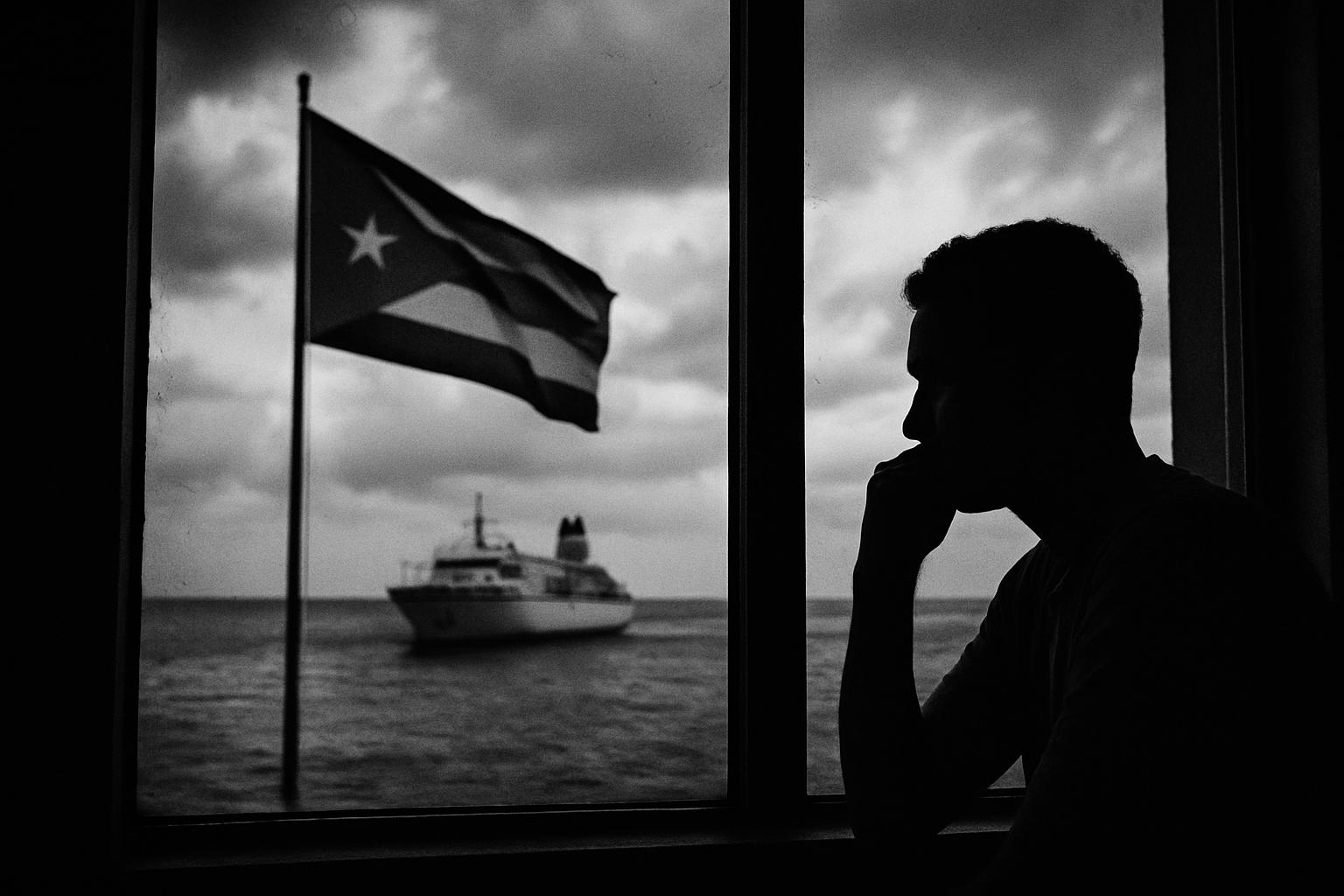
Cuba Exports Dissent: Otero Alcántara’s Exile As Tactic, Not Closure
Cuba Exports Dissent: Otero Alcántara’s Exile As Tactic, Not Closure
Luis Manuel Otero Alcántara’s move to Miami fits a familiar logic in Havana’s playbook, exporting a high-profile critic to lower immediate heat at home while keeping the deterrent shaped by the post-2021 crackdowns.
 Adrian ValeWorld Correspondent
Luis Manuel Otero Alcántara is out of Cuba and in Miami, a development that serves Havana more than it relieves the opposition. The artist and figurehead of the San Isidro Movement was detained after the island’s largest anti-government protests in decades, then left the country after the United States approved a parole request, according to the BBC. He arrived in Florida flashing the L for libertad and telling reporters the dictatorship has to end. The headline is clear. The quieter question is the one that matters. What problem did this solve for Cuba’s security services, and what did it leave untouched.
Exporting risk, keeping deterrence
Havana has cast the San Isidro Movement as a Washington-backed effort to subvert the state, a charge the group denies. The frame yields a simple security logic. Keeping a high-profile dissident at home concentrates risk. Sending him abroad offloads it. An exile cannot convene a crowd in Old Havana or test a police cordon. The symbol persists, but the street power disperses. The warning to would-be organizers stays intact because the prison term already sent it. The costs of dissent were priced in by Otero Alcántara’s years in Guanajay prison, and by the fate of Maykel Castillo, the fellow San Isidro figure who remains behind bars inside Cuba’s carceral system.
That mix, a public sentence followed by expulsion for the most visible figure, is not reconciliation. It is risk management. It lowers near-term flashpoints without diluting the deterrent the state uses to block a repeat of 2021’s mass marches, which the BBC describes as the largest in decades. The airport arrival in Miami offers no evidence of domestic liberalization. It shows the security services still set the terms of political participation at home, and that they prefer to defuse high-salience cases by moving them abroad rather than reintegrating them into civic life.
The post-2021 arc
The 2021 protests punctured the belief that scarcity could be managed indefinitely by attrition. They also produced cases that became focal points in Washington and European capitals. The BBC reports that the cases of Otero Alcántara and Castillo have been a recurring source of diplomatic tension between Washington and Havana. His exit comes with tensions already high. Cuban officials accuse the United States of an oil blockade. Washington has announced new sanctions. Public rhetoric has sharpened.
None of this is resolved by one exile. It is not meant to be. What the move does is remove a potent narrative node from inside Cuba while leaving a related one, Castillo’s case, in place. That split aligns with a tactical posture, not a strategic thaw. Cuba reduces the risk of domestic mobilization tied to Otero Alcántara’s presence. It does not drain the larger dispute over political freedoms or the treatment of other detainees.
Quiet channels or tactical reset
Was this a transactional move between Havana and Washington. The BBC reports that the United States approved a parole request and that Cuban authorities had held Otero Alcántara in an unknown location before his departure. That sequence implies basic coordination across borders. It does not prove a broader deal or quid pro quo. With tensions high, both capitals have incentives to keep narrow channels open for case-by-case problem solving. Cuba trims an internal headache. The United States takes in a dissident who is greeted by supporters and noted by officials, including Senator Marco Rubio, who has condemned Havana’s 2021 crackdown. That overlap of interests can occur without a formal bargain.
The simpler read is that Cuba’s security establishment is calibrating after 2021. The aim is to deter new mass protests, avoid martyrdom spirals, and manage scarce resources during fuel shortages and economic strain. Ejecting a high-profile figure serves that aim at little apparent cost. It projects finality while changing less than it seems. The prison term stands as the cautionary tale. The movement loses a domestic organizer. The file does not close.
Exile moves the person, not the problem.
What to watch
First, whether the treatment of other San Isidro figures shifts. Castillo’s continued imprisonment will be a clearer indicator of intent than one man’s departure. Second, whether the state allows any space for civic activity that is not openly aligned with the ruling party. The 2021 record suggests not, and the BBC notes continued pressure on San Isidro members. Third, whether Havana uses more such expulsions. If yes, that will confirm a pattern of exporting political risk. If not, this case may be a narrow fix tailored to a single high-profile detainee.
On the United States side, watch whether parole approvals for Cuban dissidents remain exceptional or become routine. Watch, too, whether public rhetoric stays at the current pitch, which the BBC reports has intensified, or whether it softens in the service of quiet casework. Either way, Otero Alcántara’s exile is a waypoint, not an endpoint. The political physics that produced it still operate in Havana, where the audience that matters to the security services is not in Miami, it is on the next corner where a crowd might form.