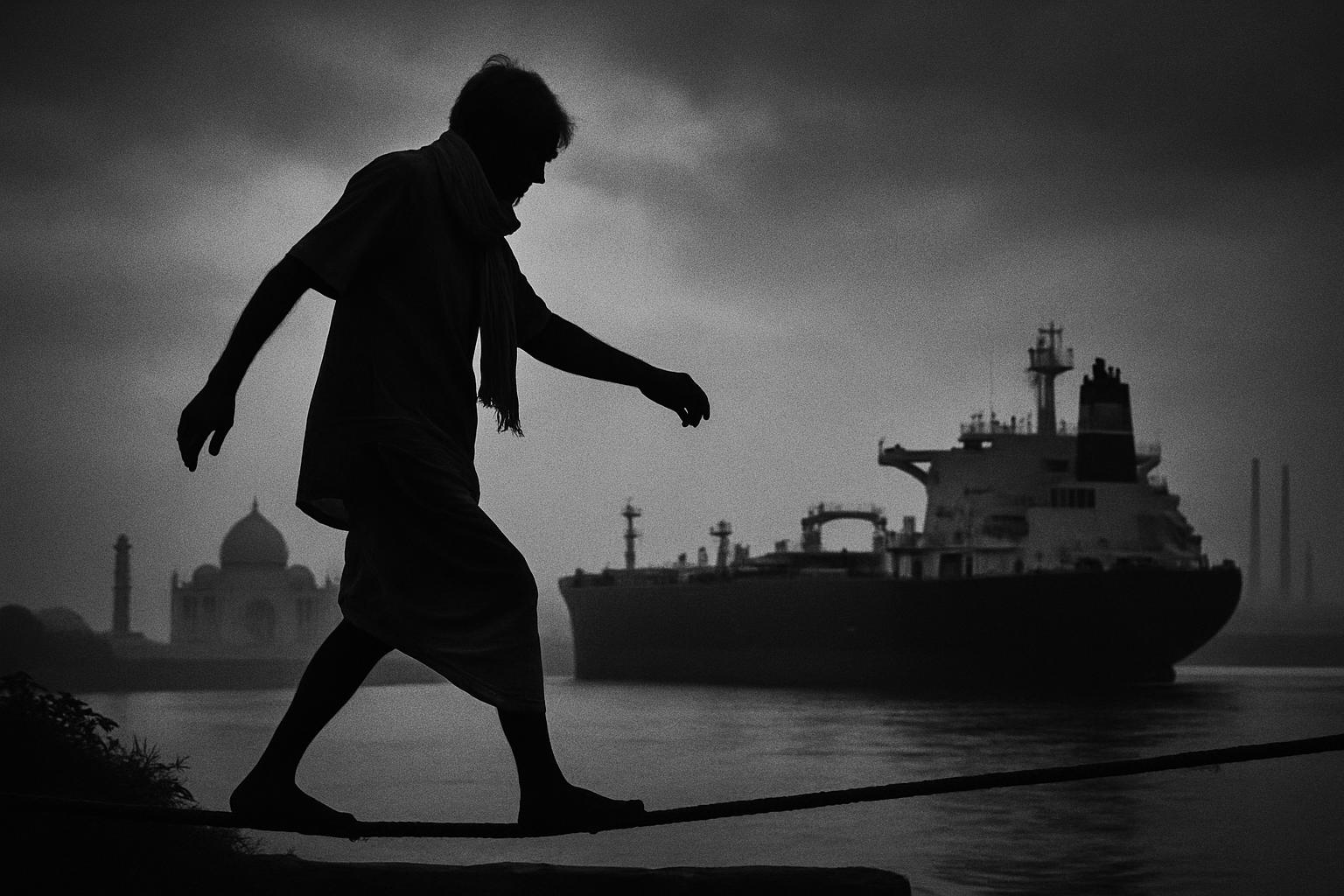
India’s Tightrope As US Strikes In Iran Reach Day 19
India’s Tightrope As US Strikes In Iran Reach Day 19
Al Jazeera says United States strikes in Iran have entered Day 19, tagged as Phase II, a duration that sharpens India’s familiar calculus on crude costs, crew safety near the Strait of Hormuz, and a diplomatic balance that also brushes connectivity bets like Chabahar.
 Adrian ValeWorld Correspondent
Al Jazeera reports that United States strikes in Iran have carried into Day 19, described as Phase II of the campaign. Duration is the headline. Time compounds risk, then hardens it into practice. For New Delhi, the moving parts are familiar. The clock makes them bite.
Pricing signals that linger
A nineteenth day does not set the oil price by decree. It does keep risk in traders' models and in boardroom memos. When a security shock outlives a headline cycle, it seeps into term contracts, insurance cover, and voyage planning. That is the channel to watch, not an intraday tick.
For India, sensitivity to crude and freight sits in delivered barrels. Small frictions add up. Longer routes around waters seen as risky, charterers insisting on tighter terms, and insurers revising conditions can each add basis points that matter at scale. If this holds, refiners may face a straight choice. Pay up for perceived safety, or accept more variance in schedules and demurrage risk.
None of this needs a market shock. It needs a sustained perception that seas near key lanes are unsettled. A nineteenth day advertises that perception to risk managers, even if spot screens look calm on a given morning.
Crews and routing
The Strait of Hormuz is a narrow chokepoint that concentrates attention whenever force is used nearby. With Day 19 on the board, shipowners and captains in the approaches will focus on route discipline, speed through constrained waters, and tight coordination with authorities. The task list is simple. Minimize exposure time, maximize situational awareness, keep communications redundancy alive.
For India, the human element is central. Even a small uptick in perceived risk can trigger stricter onboard protocols, extra watches, or revised port calls that then ripple through schedules. If tensions persist, some operators may consider convoying where available, or seek clear guidance from insurers on conduct that preserves cover. Each decision is incremental. Together they decide whether Indian cargoes arrive on time and whether crews feel assured.
Time does not just raise risk, it writes it into contracts and routines.
The diplomatic frame
Al Jazeera's Phase II on Day 19 signals this is not a one off exchange. India usually manages such periods by keeping options with Washington and Tehran. That balance is a stabilizer for the economy facing outward. The steadier the diplomatic channels, the easier it is for firms to plan around operational risk.
Prolonged action focuses minds on timing. Engagement with Washington can secure clarity on military deconfliction or navigational advisories. Commercial planners can model around that. Keeping working channels with Tehran helps read the red lines that matter for maritime traffic. Neither vector is about choosing sides. Both aim to keep the commercial plumbing from seizing while the security picture shifts.
Connectivity bets are the long view of the same problem. Options on the Iranian coast, including projects commonly discussed such as Chabahar, sit inside India's calculus for resilient access to Central Asia and beyond. When strikes stretch into weeks, the spreadsheet beneath those bets gets revisited. Schedule risk, financing risk, and reputational risk can all move, even if ground conditions look unchanged.
What not to overread
It is tempting to jump from a nineteenth day to sweeping claims about oil or shipping. Better to separate events from what they enable. Al Jazeera establishes duration and phase. That enables, but does not compel, adjustments by traders, charterers, and insurers. Prices may or may not show it on a given day. Infrastructure may or may not be touched. The test is whether perceived risk hardens into contract clauses and routing norms.
Likewise, do not read every maritime tweak as policy in embryo. At sea, operational conservatism often comes first. Companies move to protect crews and cargo. Government guidance, when it arrives, tends to codify what good operators are already doing.
The watch list for New Delhi
If strikes continue, three indicators deserve close attention.
First, insurance terms for transits near the Strait of Hormuz. If additional premiums grow in scope or are written more tightly, that is a sign perceived risk is settling in. It feeds straight into delivered costs for Indian refiners and traders.
Second, port and pilotage patterns on the Gulf approaches. If pilots grow scarcer, or if windows tighten, knock on effects will run through schedules. That touches tanker turnaround and product delivery into Indian markets down the chain.
Third, the tenor of messages from Washington and Tehran that touch navigation and deconfliction. Even brief official signals can anchor commercial expectations. Without them, market players will default to caution, which is a cost in itself.
Al Jazeera's marker that the campaign is at Day 19 is a reminder that time changes risk. For India, the mechanics are not new. Crude sensitivity shows up in delivered costs and in insurance terms. Seafarer safety lives in routing and discipline on the bridge. The diplomatic balance lives in keeping options open with both capitals while connectivity bets are measured against a shifting security backdrop. Those are the levers to watch if the strikes continue.