Ukraine Strikes Wildberries Hubs, Putting Retail Supply Chains In Focus
Ukraine Strikes Wildberries Hubs, Putting Retail Supply Chains In Focus
Hits on Wildberries logistics centers in Krasnodar and Stavropol show how marketplace nodes push shock through seller inventories and delivery lanes, while offering only a narrow guide to broader consumer effects.
 Adrian ValeWorld Correspondent
The overnight strikes on Wildberries logistics hubs in Krasnodar and Nevinnomyssk were confirmed by regional governors and by the company’s founder, who said workers were evacuated and that staff were injured. BBC Verify analysed footage and confirmed fires at the two locations. It was the second time in four days that facilities tied to Russia’s largest online retailer were hit, after earlier strikes on warehouses in Tambov and Elektrostal.
Ukrainian President Volodymyr Zelensky said Ukraine had hit logistics hubs in the Krasnodar and Stavropol regions that he described as involved in supplying the Russian army with components and equipment. His claim points to why such sites appear on target lists. Warehouses are not just storage. For marketplace operators like Wildberries, they are the junctions where third party seller inventory becomes deliverable orders, where payments are reconciled with outbound parcels, and where the promise of rapid delivery is either kept or missed.
Unlike a classic first party retailer, Wildberries and rival Ozon act largely as marketplaces. The platforms connect independent sellers to buyers, store and deliver their goods, and handle payments. That structure dictates the channel of disruption. When hubs go offline, the immediate losses are concentrated among the sellers whose stock is physically in the affected buildings, not spread evenly across the platform’s entire catalog. The BBC reports that hundreds of sellers have been affected by recent strikes, and one trader told BBC Russian she lost the clothing she sells, which is her only income.
The operational picture that follows a strike is mundane but consequential. Evacuations interrupt night shifts, order picking halts, and parcels staged for dispatch stall until rerouted. Backlogs then move to other nodes if available, and delivery times lengthen on the lanes those hubs served. Because marketplace hubs batch inventory by seller and by region, damage at a single site can translate into many small stock outs for specific items rather than an across the board shortage. That is why images of a large blaze can overstate the breadth of consumer impact.
What the strikes do disrupt is the steady flow of goods for the sellers tied to those nodes. Sellers absorb physical inventory loss and the opportunity cost of missed sales until they can restock and reallocate to other warehouses. Some will exit the platform if losses and uncertainty mount, as the trader’s account of fear and precarity suggests. Payment handling can become more complex too, since refunds and dispute resolution rise when orders do not ship on time.
What the strikes do not prove is a national retail breakdown. The BBC article does not present evidence of system wide failure. Wildberries’ founder wrote that they will continue to do their work, and the reports describe damage at specified sites over the last week. Absent data on platform wide order volumes, delivery performance, or inventory depth, claims of collapse or nationwide shortages outrun the record.
There is also the question of purpose. Zelensky framed the facilities as linked to military related supplies. A Ukrainian analyst quoted by the BBC argued that the rationale is to disrupt logistics for dual use and sanctioned goods, with collateral economic and psychological effects. Russian officials reported injuries at the retail sites and described a wider drone attack that included strikes on an oil depot. Attribution and intent are part of the battlefield narrative, but the measurable civilian market effects still flow through the retail plumbing described above.
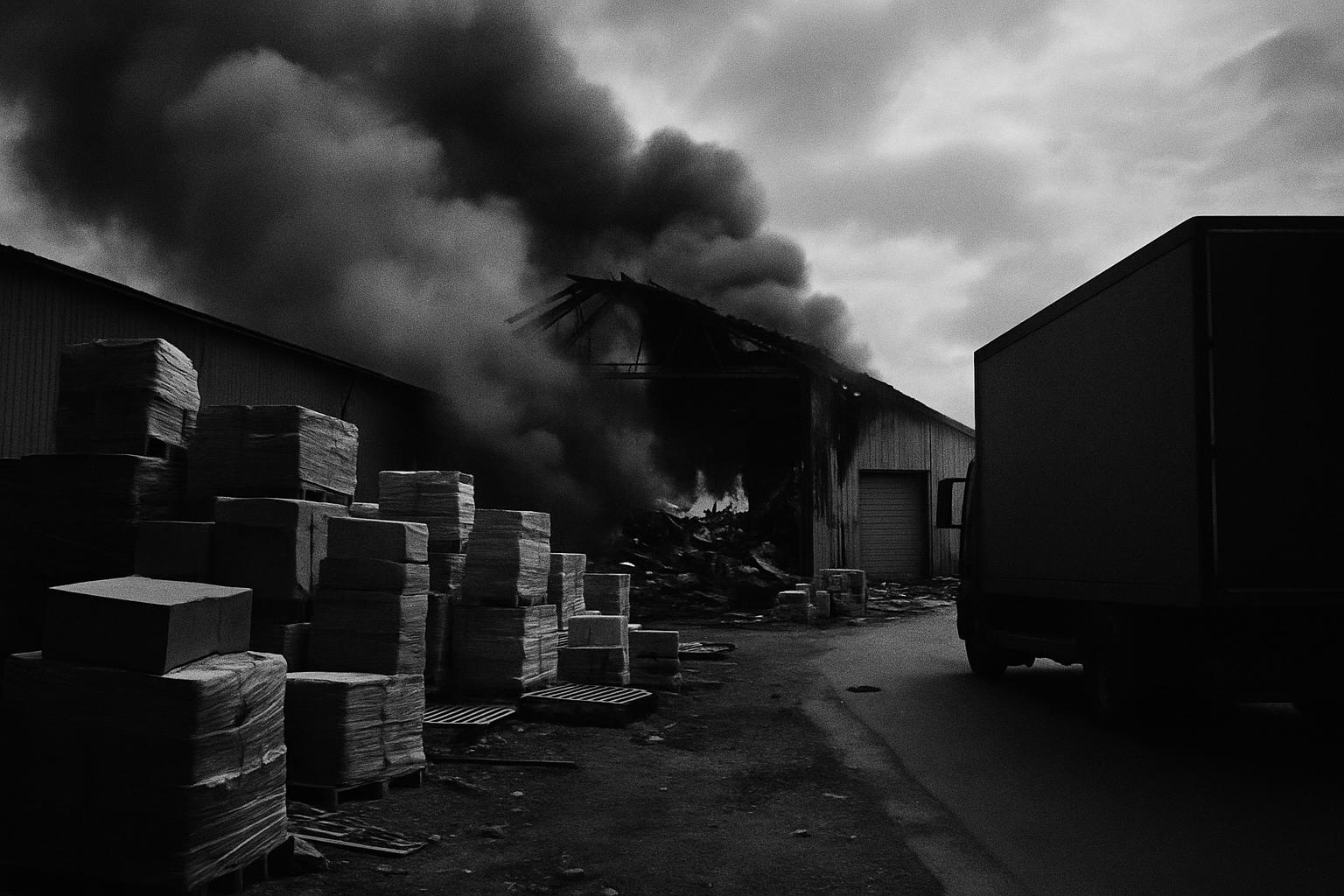
The image of a warehouse fire suggests broad scarcity, but marketplaces tend to translate damage into many narrow gaps on many shelves.
Insurance sits in the background of any recovery. The BBC report does not detail coverage. The pivotal questions in cases like this are basic. Are warehoused goods insured by the platform, by the seller, or by both. Do policies treat war and terrorism risks as covered perils or as exclusions. How quickly can claims, if valid, convert into liquidity for restocking. The answers determine whether losses land on small sellers who carry little cushion or are socialised across a platform’s balance sheet. Until those answers are public, the financial shock to sellers remains a matter of exposure, not conjecture.
Regional consumer prices are another area where simple stories travel faster than the mechanisms. If routes into Krasnodar and Stavropol have to be partially reconfigured, delivery times can lengthen and convenience can dip. If sellers lose stock and delay replenishment, some items go scarce in those catchments. Both effects can tilt prices up at the margin if they persist. Whether that happens depends on how much capacity can be shifted to other warehouses, how many sellers can restock quickly, and whether consumer demand flexes to substitutes. The BBC piece offers no pricing data, so any wider inflation claim would be premature.
The prior weekend’s strikes in Tambov and Elektrostal, which the BBC says killed eight people and destroyed buildings in satellite images, underline a pattern. Repeated hits over separate regions can force platforms and sellers into stop start logistics, with each incident resetting the clock on recovery. Even then, the distribution of pain is uneven. Some sellers are unscathed, some lose everything in a single night, and many confront weeks of uncertainty.
As this quieter front of the war moves into retail logistics, two filters are useful. First, follow the chain of custody for goods, from seller inventory to parcel handoff, because that is where disruptions actually live. Second, distinguish between physical spectacle and market scope. The former is large and televisual. The latter is granular, regional, and governed by how fast a marketplace can reassign lanes, process claims, and replenish stock.