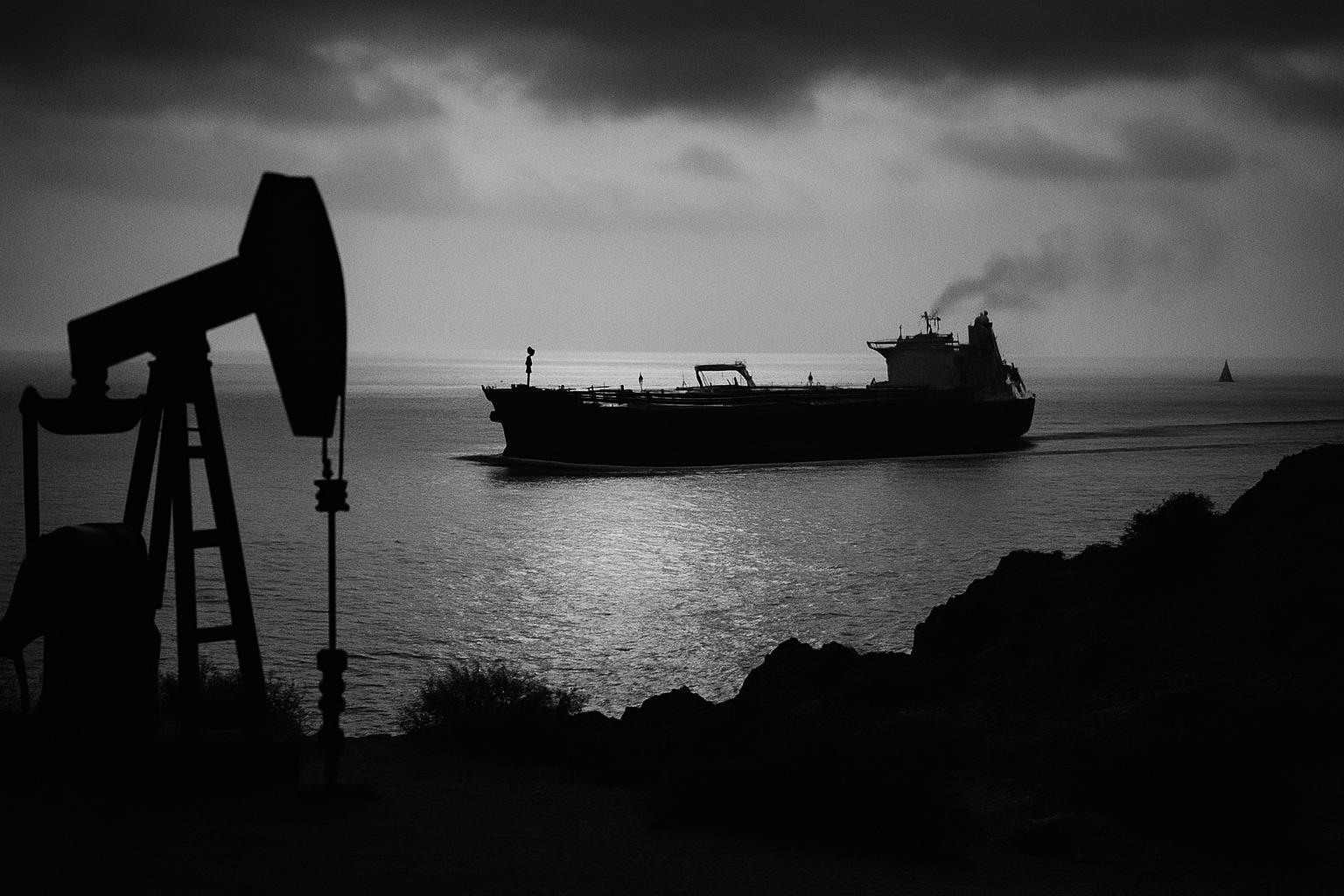
Who Pays To Guard Hormuz? Trump Swaps Tolls For Gulf Investment
Who Pays To Guard Hormuz? Trump Swaps Tolls For Gulf Investment
Trump dropped a 20% Strait of Hormuz toll and touted “massive” Gulf investment for U.S. coffers, but the source stops short of naming payers, timelines, or legal authority, leaving one question: who underwrites escort risk, and on what basis.
 Adrian ValeWorld Correspondent
Donald Trump floated a 20 percent transit fee in the Strait of Hormuz, then disavowed it and promised “massive” Gulf investment in the United States instead. The shift reframes the same question he raised, not the answer. If protection at sea is not funded by a toll, who takes the risk and under what authority do they sail.
On Monday, the U.S. president spoke of “reimbursement” for “any and all costs necessary to do the job of providing safety and security.” A day later he said he did not “like the concept of a fee,” adding that “Trade and Investment Deals that the various Gulf States will be making with the United States” would replace it after “highly productive conversations with Middle East leadership.” The administration has not explained how it would ensure safe passage in a waterway Washington does not control. The source names no signatories, commitments, or timelines for the investments invoked. It also does not set out any legal basis for escorts or fees. When risk must be priced and assigned, those absences are not cosmetic.
From Toll to Side Deal
A toll is blunt. It ties cost to use and turns burden-sharing into a ledger line. It also runs into the position his own officials have stated. U.S. Secretary of State Marco Rubio said that charging fees in an international waterway would undermine international law. Trump then backed away and returned to disliking “the concept of a fee.”
The pivot moves money upstream of the mission. If investment from the region is the quid, what is the operational and legal quo.
A security-for-investment pitch changes the ledger in three ways.
- It replaces a transparent user charge with opaque side payments.
- It separates payers (investors) from users (global shippers), complicating who prices risk and how.
- It talks funding before setting a public framework for protection and access.
That order is not a detail. In a contested strait, it is the plan.
The pivot leaves the money upstream of the mission, but not the risk.
The Underwriting Puzzle
At sea, risk attaches to hulls, cargoes, crews, and the forces that would guard them. If the United States or any partner fields escorts, someone absorbs operational risk and liability. Without a fee, four pathways present themselves, each with different tradeoffs.
- Taxpayer underwriting by the protecting state. This is the default if forces sail without a user charge. The political question then becomes how elected officials explain exposure and cost during active hostilities described in the source report, which details recent attacks in multiple Iranian locations, aerial engagements reported by Kuwait, and strikes on vessels in the Strait of Hormuz. The source does not state any appropriation, authorization, or coalition mandate for escorts.
- Private risk absorption by shipowners and insurers. If escorts are uncertain or partial, ships rely on private calculations. That still leaves the problem of command, coordination, and deconfliction for any protective presence the United States might field, which the source does not specify.
- Third-party cross-subsidy via investment. Trump’s formulation implies that Gulf investment into the United States would substitute for tolls. That raises a governance issue: how to tie diffuse capital inflows to a definable maritime service without formal commitments to access or standards.
- Hybrid burden-sharing. Even without a fee, governments can pursue off-budget burdens through in-kind support or side agreements. The source gives no details on such arrangements or any multilateral design.
Each pathway forces the same follow-up: who sets the rules of the road if escorts begin before a framework is in place. Rubio’s statement about fees and international waterways underscores that norms are not an afterthought. The source provides no claim of legal authority established for escorts, fees, or blockades beyond what it reports on timing and rhetoric.
Sequencing Without a Scaffold
The core problem is order of operations. The president’s statements place investment—described as “massive,” but not specified—before the articulation of how protection would be provided, to whom, and under what standards. In a strait used by global shipping and contested amid an escalating conflict, sequence is substance.
- Access and non-discrimination. If the stated aim is safety of passage, the rules for who benefits need to be public. The source does not describe any coalition, registry criteria, or access policy.
- Command and control. Protection without a published chain of command invites risk. The report notes that the United States does not control the waterway and offers no mechanism for ensuring safe passage.
- Accountability. If investment is the quid, voters and investors will ask what measurable security output is the quo. Without a framework, outputs are hard to define and harder to audit.
Signals in a Live Theater
The report’s other thread is escalation. It notes a U.S. military blockade of Iran was set to restart hours after Trump spoke, that a mid-June memorandum of understanding had lifted a prior blockade and opened the strait, and that renewed attacks have put that preliminary deal in peril. In that setting, rhetorical pivots carry weight. A floated fee, then a dislike of fees. Talk of “control,” then a stress on investment. In conflict, signals become inputs. Intent is not implementation.
What is clear from the source is what is not yet offered: no finalized policy, no identified investing states or amounts, no timelines, and no legal or multilateral framework for escorts. Trump backed away from a fee. He did not foreclose it forever. He promised investment. He did not bind it to an operational plan.
The question that follows to any next briefing is simple and unanswered. If the money comes first, who carries the risk at sea, and under what authority do they sail.