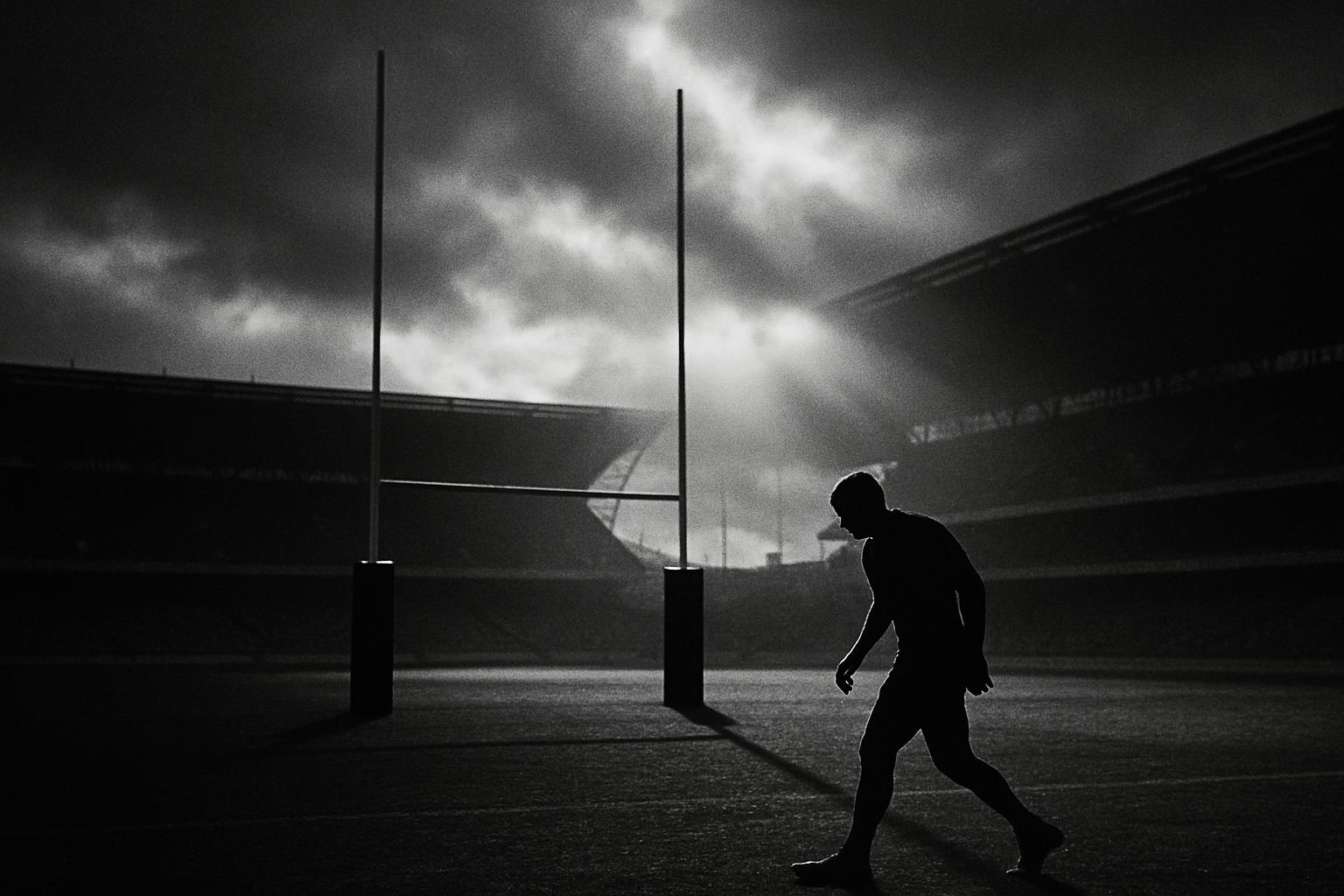
At Eden Park, The All Blacks Turn Field And Fear Into A System
At Eden Park, The All Blacks Turn Field And Fear Into A System
New Zealand’s six-try win over Ireland read like a manual on renewal, with selection clarity and breakdown ruthlessness feeding a fortress aura that visiting templates struggle to carry out of Dublin.
 Sam OkaforSports Writer
There is home advantage, and then there is Eden Park. New Zealand did not just beat Ireland, they ran another security drill. Six tries, gates shut, rhythm confiscated. Thirty two years without defeat here and 53 Tests unbeaten is not magic, it is method, and on Saturday the method looked refreshed.
Start with the facts that set the tone. New Zealand scored through Patrick Tuipulotu, Ardie Savea, Will Jordan and Asafo Aumua in a first half that turned Irish mistakes into points, then Damian McKenzie and Anton Lienert-Brown finished the job late. The All Blacks were without sentiment, they were first to everything that mattered. When James Ryan lost the ball on Ireland’s first meaningful visit to New Zealand territory, the home side went the length with a second row passing to a second row, Tuipulotu blasting past Hugo Keenan. When Stuart McCloskey threw a loose ball near his own line, Jordan was already cashing it. It felt punitive because Eden Park makes punishment the default.
Selection clarity feeds that punishment. Ruben Love started a third straight Test at fly half, with Beauden Barrett again left out, and kicked five conversions. McKenzie was the roaming playmaker, an outstanding presence who finished a sweeping second half move. The All Blacks looked like a team that knows who does what and when, which is the quiet heart of renewal. After a World Cup era that asked questions about succession, the answers in Auckland were not flashy, they were orderly.
Order starts at the ruck. You do not need a stat sheet to spot the tilt. Luke Jacobson’s yellow card for a dangerous clearout was a rare misstep in a game where New Zealand were otherwise efficient in the breakdown traffic, arriving square, slowing Ireland when they had to, and snapping at loose carries. Ireland’s first half was a list of self-inflicted wounds, and that is exactly the kind of list Eden Park forces opponents to write when their support lines arrive one beat late. The venue amplifies small errors into big outcomes.
This is where Eden Park becomes more than turf. The aura is not only history, it is built by selection that breeds trust and by systems that survive stress. Will Jordan is one of those systems unto himself, already the All Blacks record try scorer, and his finishing touch was matched by his anticipation. Savea set a physical and mental tone, talking about throwing the first punch, and New Zealand landed it inside five minutes. Ireland can accept that they were punished by quality, because Dan Sheehan said as much, but the quality on display was old muscle tied to new sinew.
The template that made Ireland formidable under Andy Farrell is still coherent. They improved after the break, scored through Joe McCarthy and Hugo Keenan, and found edges when the game loosened. But away from Dublin, especially at this address, the margins their structure usually controls can fray. Targeted kicking games land a half metre shorter, cleaners meet a half second later, and the ball presentation that is usually showroom pristine becomes just untidy enough for black shirts to pounce. That is not a funeral for an approach, it is a reminder that the best frameworks must travel and survive acoustics like these.
At Eden Park, small errors grow teeth, and the All Blacks teach them to bite.
Think about how New Zealand queued their threats. Tuipulotu running hard and straight beside Josh Lord was not a trick, it was repetition at speed. Aumua arriving from the bench to crash over before the break read like a coach’s note executed on time. McKenzie trailing the line in the second half was a commitment to second touches, not improvisation for its own sake. Love’s 10 points off the tee were the punctuation that makes paragraphs read clean. The cohesion was visible, and it came from selection choices that had been signposted over the last fortnight against France and Italy.
Ireland will point to the score flurry in 2022 at the same ground and how they recovered to win that series overall, which is a fair memory and a useful caution. This result settles nothing about a broader season or any future series, and it does not forecast decline. It does, however, supply tape that asks whether the Irish model needs a fresh wrinkle when the venue strips away comfort. The scrum was not the story, the tackle count is not the story, the opening 40 minutes of decision making is the story, and how the green shirts protect their own possession when the volume knob is turned up is the sequel.
For New Zealand, the post World Cup renewal is not finished, and Eden Park is not a travel voucher. The All Blacks head to a four Test series against South Africa with a perfect 15 points banked from three home fixtures, a round number that will look irrelevant the moment the Springboks line up. Yet the way they arrived at that number matters. They were accurate early, merciless off turnovers, and calm when Ireland surged, which is the footprint of an identity rather than a one off spike.
Eden Park is not a myth that wins games on its own. It is an amplifier for teams that do their homework. On this night, New Zealand did, and Ireland left with lessons instead of points. Renewal looked like clarity rather than novelty, and aura looked like sweat rather than smoke. In a sport that keeps score, that story tends to repeat at this address.