Free Speech In Miami, Fault Lines In London: Football’s Falklands Flashpoint
Free Speech In Miami, Fault Lines In London: Football’s Falklands Flashpoint
A White House nod to First Amendment rights, Downing Street urging a Fifa inquiry, and a banner from Argentina’s victors turned a semi-final celebration into a lesson in how football absorbs unfinished history.
 Sam OkaforSports Writer
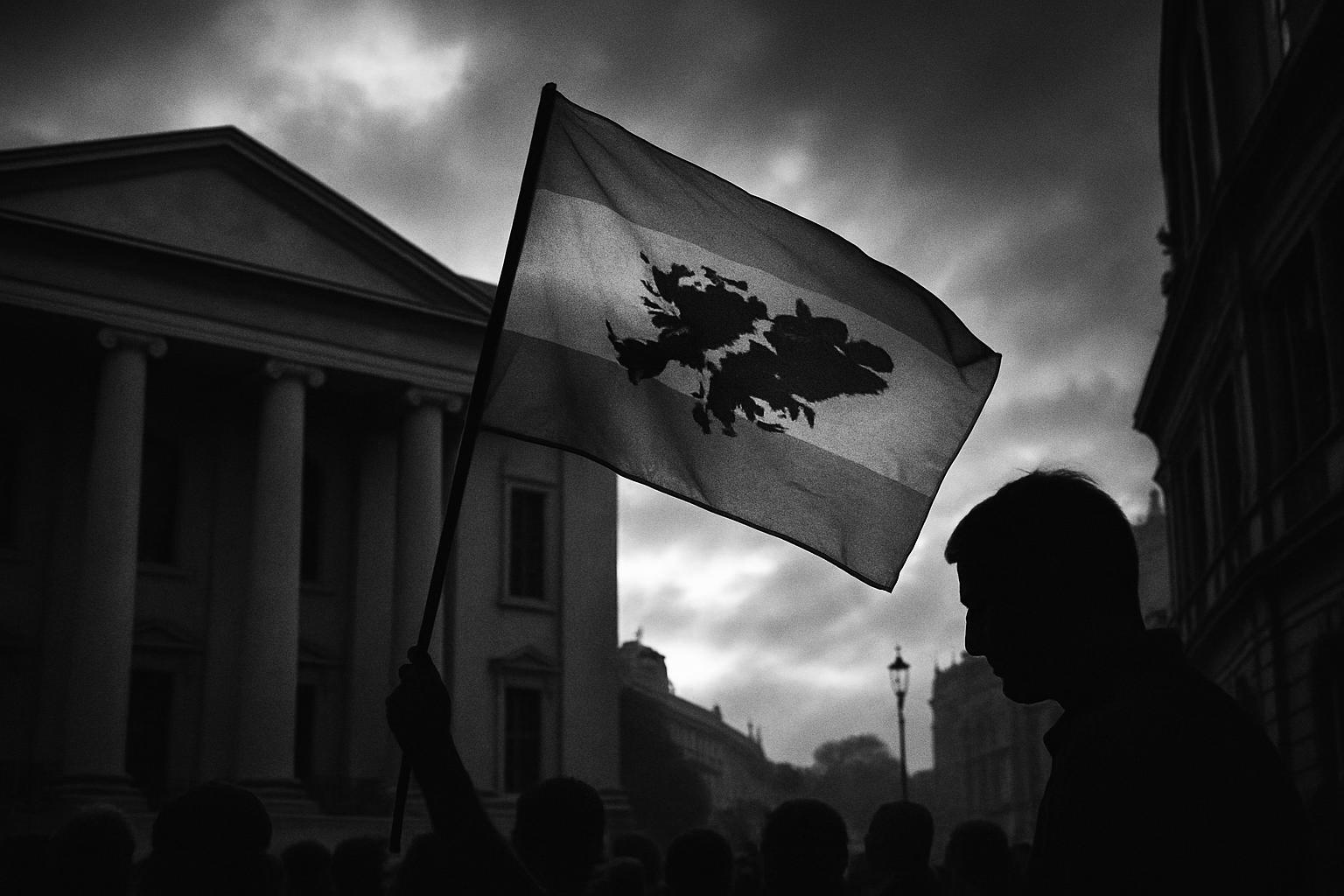
The banner was short, the echo long. After Argentina beat England in a World Cup semi-final, players held a sign that read Las Malvinas son Argentinas, translated as The Falklands are Argentine. A celebration became an argument in public, and the mixed zone filled with press officers.
The question was not subtle. What happens when a team lifts more than a trophy. The answer depends on where you stand and which rulebook you reach for.
In Washington, the response came clean. Asked whether the players were in the wrong, Andrew Giuliani, head of the White House Fifa task force, said the team had the opportunity and ability to make those statements in the United States. He pointed to free speech protections in the US Constitution, saying, we believe in our First Amendment rights here in the United States of America. That was not a ruling on the Falklands. It was a statement about American principles. In this country, people can speak.
Across the Atlantic, the same picture landed with different weight. Downing Street backed calls for Fifa to investigate the incident. The prime minister’s official spokesperson said, the World Cup might not be ours, but the Falkland Islands definitely are. Our commitment to the Falklands will never waver. The government of the Falkland Islands voiced its own disappointment and said it hopes Fifa will sanction all behaviour of this nature in line with its own rules. It added that it does not wish to see politics brought into sport, and that islanders do not wish to be used as a political football in every conversation about England and Argentina.
Fifa has indicated that Argentina face potential disciplinary action that could stem from rules on political statements. Downing Street echoed that the matter rests with football’s governing body, even as it urged scrutiny. No outcome has been announced, and UK officials stressed that any action would be for Fifa to decide.
Context loaded the cloth. The Falklands remain the subject of a sovereignty dispute between the UK and Argentina, a dispute that became a brief but bitter war in 1982. A British military task force ejected Argentine forces that had landed on the islands to stake a claim. The 74 day conflict led to the deaths of 255 British military personnel, three islanders, and 649 Argentine soldiers. In 2013, Falkland Islanders voted overwhelmingly to remain a UK overseas territory. Of 1,517 votes cast on a turnout above 90 percent, 1,513 were in favour and three were against.
Football did not create these facts. It amplified the feeling around them. After a dramatic 3-2 win over Egypt in the last 16, Argentina players sang chants that referenced the Falklands, as well as national greats Diego Maradona and Lionel Messi. After the semi-final, the banner handed cameras a line of text that everyone could quote.
The scoreboard settled one contest, the banner opened another.
Politics did not stop at the touchline. Argentina vice-president Victoria Villarruel posted on X that it was not just another match, alongside a video of what appeared to be Argentine soldiers. She wrote, the Falklands are Argentine, and added that they were banned from bringing them to the stadium but carried them in blood and in hearts.
So the pre-match story for the final now includes constitutional law and cabinet statements. The White House spoke about free speech in the United States. Downing Street spoke about British sovereignty and asked the sport’s authorities to look into whether rules were broken. The Falkland Islands government spoke about disappointment, about rules that should be applied, about not being made into a symbol every time England and Argentina share a field. Each actor stayed in its lane, yet the lanes still converged on the same strip of grass.
This is how players become stand ins for diplomatic signaling. They sing, they celebrate, they hold a banner, and suddenly the frame widens. They do not set policy. They carry it, even when they do not intend to. That is the bargain of modern sport, the reach that comes with winning.
What happens next is clear only in outline. Reporting says Argentina face potential disciplinary action, and that an investigation is a matter for Fifa. The Falkland Islands want behaviour of this nature sanctioned in line with existing rules. Between those lines, football people will talk tactics and matchups, and political people will parse phrasing and precedent.
Back on the path to the final, nothing about the game itself has changed. The pitch will be the same size. The whistle will sound. But the night will carry more than minutes and substitutions. A banner held aloft in celebration can carry the weight of a referendum, the echoes of a 74 day war, and the pull of two capitals speaking to their own audiences. That is not a lament. It is recognition. The box score will end one story. Another will keep walking beside it.