Hong Kong Bookshops Face Sedition Raids And A Supply-Chain Squeeze
Hong Kong Bookshops Face Sedition Raids And A Supply-Chain Squeeze
Police raids on two Mong Kok bookstores and five arrests underscore how inspections, customs referrals, and an undefined red line shift speech controls into the retail chain, where risk travels with cartons and inventory rather than courtroom headlines.
 Adrian ValeWorld Correspondent
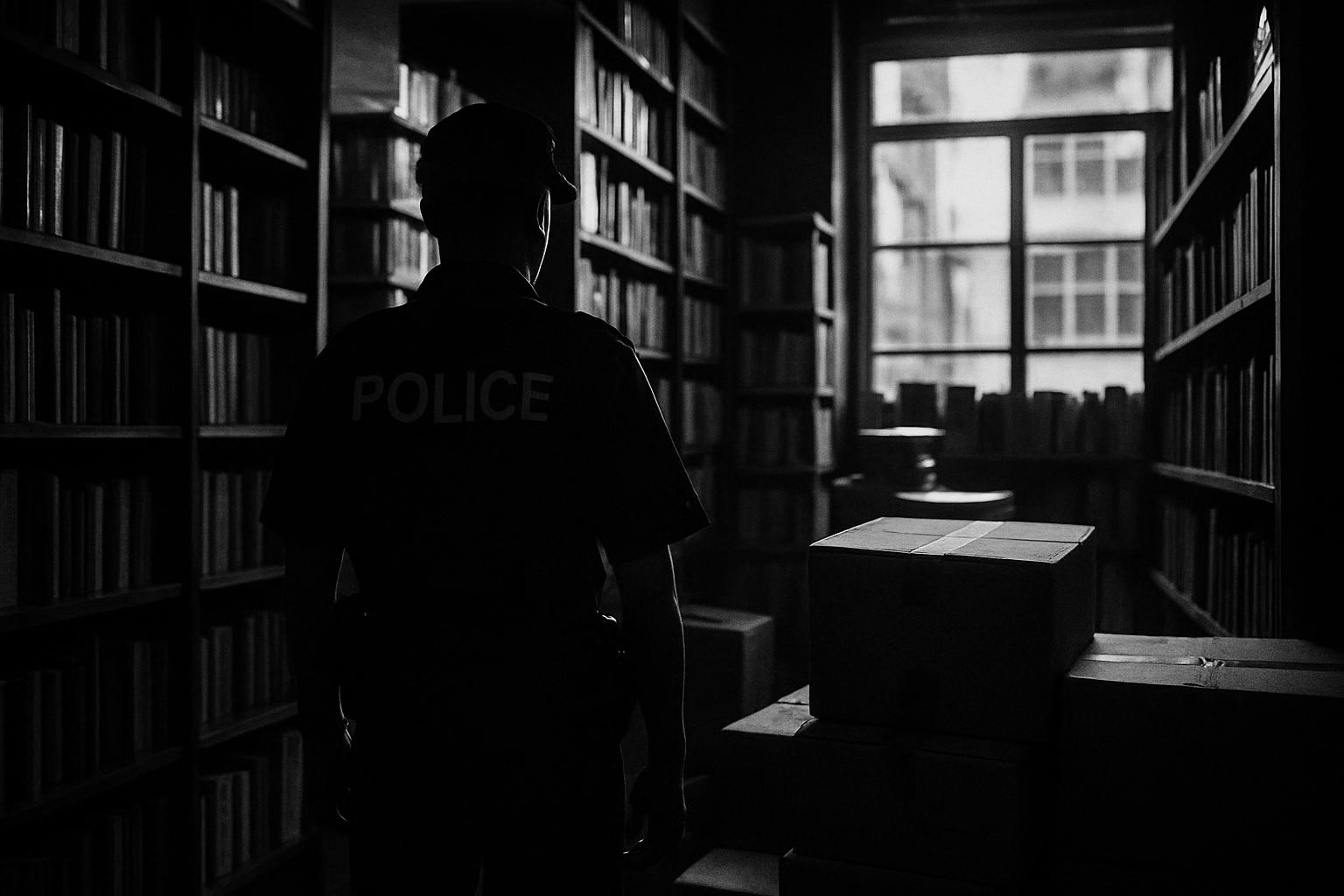
Hong Kong police raided two bookstores in Mong Kok and arrested five people on suspicion of selling publications with seditious intention. The operation focused on small independent sellers, not prominent political figures. Videos showed officers removing boxes from the building that houses Have A Nice Stay, and local media reported a search at Greenfield Book Store. Police said the case began with a referral from customs after allegedly seditious books were found in an overseas shipment.
The route matters. A case that starts at a loading dock and ends at a shopfront turns the retail chain into a compliance system. Screening at the border inserts risk at the point of import. Inventory checks and seizures pull that risk onto the shop floor. Police said the five suspects were linked to displaying and selling seditious publications, defined by officials as content that stirs up hatred against the government, the courts, and law enforcement. That standard is broad, and it travels wherever books are stored, sold, or shipped.
The Bookstore As Regulator
Hong Kong’s security chief, Chris Tang, said booksellers have a responsibility to ensure their titles do not endanger national security. He compared it to food vendors keeping poison off the shelves. There is no official list of banned books. Tang said authorities would judge content, not titles. In practice, that tells retailers to read everything they stock, then to second guess how it might be read by investigators.
If you are a bookseller, you have a responsibility to ensure that the books you sell do not endanger national security.
Without a list, the risk is elastic. A title that passes a private review today might be seized tomorrow, and the costs are concrete. Shops face the loss of stock during an inspection, the possibility of arrests, and the price of legal advice that most independents cannot absorb. Have A Nice Stay had already announced it would close at the end of August, citing financial difficulties and an elusive red line. In that climate, refusal to stock anything near the line becomes the least risky choice.
Enforcement By Inventory
This was the third round of bookstore arrests reported this year. In March, police arrested the owner and staff of Book Punch, reportedly over seditious publications that included a biography of Jimmy Lai. In June, two booksellers were arrested on suspicion of selling seditious publications and receiving funds from foreign political organisations. The pattern signals that independent shops, rather than large chains, are where enforcement can most efficiently shape what is available to the public.
The customs referral in the latest case shows how the net can tighten before a book reaches a shelf. A shipment flagged at the border alerts police before any retail sale occurs. For importers and small shops, that blurs the line between logistics and liability. Suppliers risk scrutiny when they ship. Retailers carry that risk when they receive. Either point can trigger a raid.
The Message Of Uncertainty
Officials say security laws are crucial for stability. Tang said the law is clear, and that incitement of hatred against authorities is unlawful. Yet by declining to publish a list of prohibited books, authorities preserve discretion and spread uncertainty. That signal travels to distributors and landlords, and it lands heavier on small retailers than on larger companies with compliance staff and legal budgets.
Hong Kong once marketed itself as a place where mainland readers could buy what was restricted across the border. The disappearance of figures linked to Causeway Bay Books a decade ago, and Lam Wing-kee’s later account of detention after crossing into Shenzhen, marked a turn in that story. After the 2019 protests, the environment for independent shops grew more challenging. The current bookstore operations make that change measurable in cartons seized and inventories second guessed.
Chilling Through The Supply Chain
Raids on activists make headlines. Raids on book boxes change behavior. When the law is enforced through retail exposure, each actor in the chain adjusts. Printers ask more questions. Importers pause orders to avoid scrutiny. Small shop owners fill shelves with safer titles and clear space where the risky ones would have been. The result is quieter than a courtroom, but more pervasive. It reduces the range of books that ever reach a browser’s hand.
There is no public list to consult. Police have not specified the titles at issue in the latest case. The line is, as one shop put it, elusive. That is the point of a regime that relies on content judgments after the fact. It keeps sellers guessing. It keeps readers guessing too. In a city where a seizure can begin with a customs scan and end with a handcuffed bookseller, guessing is a form of self-censorship.
None of this announces the end of independent bookselling. Shops still open, stock, and sell. The point is narrower, and more immediate. Enforcement that rides the supply chain can chill expression without a single marquee trial. It works by making the cost of guessing wrong too high for small retailers to bear.