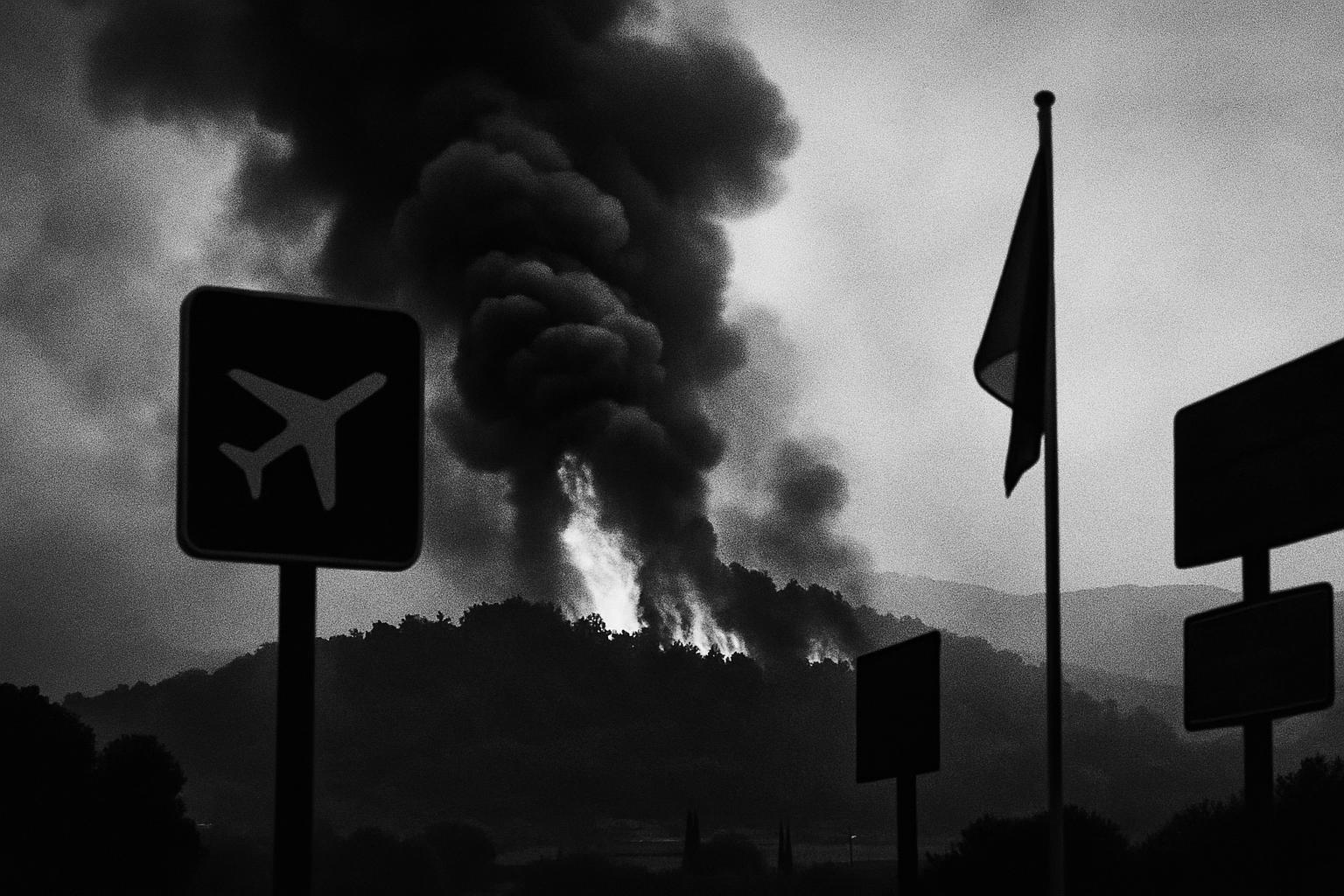
Wildfires In Crete Test Summer Travel Plans To Greece And Spain
Wildfires In Crete Test Summer Travel Plans To Greece And Spain
With fires in Crete and mainland Greece claiming three firefighters by July 30, and Spain and France warning of flare-ups in severe heat and wind, Indian travellers and tour operators should track advisories, insurance terms, and itinerary flexibility as conditions shift faster than policies.
 Adrian ValeWorld Correspondent
Crete is burning, and August itineraries to the Mediterranean should be built to bend, not break. Fires in Greece have already claimed three firefighters by July 30, Spain has shifted command near Madrid to the national level, and France is warning that heat and wind can turn a quiet map noisy in hours. Plan for change, then keep planning.
What happened, and when
On July 29, 2026, Greece's fire service reported three firefighter deaths while tackling blazes on Crete and in the south of the mainland, as extreme heat complicated efforts across southern Europe. That day, evacuations were reported in parts of Greece as new fires broke out under tough weather. Spain elevated a major wildfire near Madrid to operational level 3, a first that moved command to the national government, while officials said the situation was improving but fragile. In France's Gironde, authorities said the burned area remained stable at 42,000 hectares, and warned that conditions could worsen with heat and wind. The European Commission listed planes, helicopters, personnel, and vehicles sent from multiple countries to support France and Spain.
On July 30, Greek officials provided more detail. Two firefighters died after being trapped by a blaze in the Rethymno area of western Crete amid gale-force winds, and a third died near Gytheio in the Peloponnese. Multiple villages on Crete were evacuated as fronts spread quickly. In Spain, Prime Minister Pedro Sanchez repeated that the next 12 hours would be decisive, urging caution because of higher temperatures, lower humidity, and gusts. Authorities allowed thousands to return to homes in parts of Toledo, Madrid, Avila, and Castellon, while a fire near Valencia remained out of control. In south-west France, large fires in Gironde were described as stabilised despite flare-ups, with officials warning of dry winds and temperatures up to 41C. Reporting also noted that Europe is warming roughly twice as fast as the global average, which raises baseline wildfire risk across long seasons, although ignition and spread still depend on local conditions.
The next 12 hours matter more than the last headlines.
What it means for peak-season itineraries
For Indian travellers and tour operators routing trips to Greece and Spain in August, the mechanism is simple. Fire behavior can turn with wind shifts in hours, while airline schedules, hotel operations, and package terms move in days. Bridge those timelines with layered flexibility.
- Book with changeable or refundable air and hotel fares where possible, and confirm the exact conditions for date changes versus destination changes. Avoid assumptions that all wildfire disruptions trigger free changes. Policies often respond only to airport closures or government orders.
- For tours and cruises that include Greek islands or Spanish coastal calls, ask operators about wildfire contingencies, such as substitute ports, altered shore excursions, or revised island routing. Request these terms in writing.
- If you are self-driving in Crete or mainland Greece, check daily for road or area closures from local authorities before setting out. Fire lines can cross secondary roads quickly, and detours can be lengthy.
- Maintain buffer time between domestic hops. If a day trip depends on a morning ferry and an afternoon flight, add margin for delays caused by smoke, heat advisories, or road diversions.
Insurance and passenger rights
- Review travel insurance for natural disaster coverage. Look for benefits that address trip cancellation, interruption, and additional accommodation or transport if an area becomes inaccessible or unsafe. Many policies exclude events already known at the time of purchase, so check the policy's definition of a known event and the purchase cutoff.
- Verify whether your policy treats government-ordered evacuations, civil protection red alerts, or smoke-related health advisories as covered triggers. Keep receipts and official notices.
- Under EU air passenger rules, extraordinary circumstances such as wildfires usually do not trigger compensation, but you still have rights to rerouting or refunds if your flight is cancelled. If a flight operates but you decide not to travel, standard fare rules apply.
- For package holidays sold by Indian or European operators, review force majeure clauses and the process for significant changes. If a key element, such as a specific island stay, becomes unavailable, you may be offered an equivalent alternative or a partial refund depending on the contract.
Country notes to frame decisions
Greece: By July 30, officials confirmed that two firefighters died in the Rethymno region on Crete after being trapped by a fast-moving front in high winds, and that a third died near Gytheio on the Peloponnese. Multiple villages on Crete were evacuated. Separate fires were reported on Paros, Lesbos, and the town of Trifylia. Travellers bound for Crete should track local civil protection advisories and heed police instructions, since evacuations can be ordered with little notice.
Spain: On July 29 and July 30, Prime Minister Pedro Sanchez said the next 12 hours would be decisive near Madrid, a signal that conditions could shift rapidly with heat, wind, and low humidity. Authorities allowed thousands to return in some areas, while at least one fire near Valencia remained out of control on July 30. Madrid-region operations were placed at operational level 3 on July 29, moving command to the national government, an unusual escalation that underscores potential for rapid change.
France: On July 29, the Gironde prefecture said the burned area remained stable at 42,000 hectares, and cautioned about unfavorable weather. On July 30, officials still described large fires as stabilised but warned of flare-ups with dry winds and very high temperatures. Travellers to south-west France should budget for sudden closures of forested recreation areas and local roads when flare-ups occur.
A practical checklist
- Monitor: Check local civil protection feeds each morning and evening for Crete, the Peloponnese, Madrid, Castilla y Leon, Valencia, and Gironde. Follow airport and port operator updates for Heraklion, Chania, Athens connections, Madrid Barajas, Valencia, Bordeaux, and nearby facilities.
- Confirm: Reconfirm hotel operations in rural or hillside areas where evacuations have occurred. Ask about air quality mitigation, such as room filtration and the ability to close intake vents, if smoke is present.
- Prepare: Pack N95 or FFP2 masks for smoke days, and build a 24 hour kit with water, snacks, power banks, and copies of passports and insurance details. If advised to evacuate, leave promptly.
- Document: Save screenshots of advisories and carrier or operator messages when making changes. This helps with insurance and customer service later.
The near term outlook is less about a single closure than a rolling pattern of flare-ups and partial reopenings. On July 29 and July 30, officials across Greece, Spain, and France urged caution because heat, low humidity, and wind can erase overnight gains. Travellers should mirror that caution in their planning, build buffers, and stay ready to adjust.